What Fire Safety Signs Do I Need?
Fire safety signs are a legal requirement in UK workplaces and are essential for protecting people during an emergency. They provide clear instructions, guide occupants to safety and ensure fire-fighting equipment can be located quickly.
If you’re asking “what fire safety signs do I need in the UK?”, the answer depends on your building, risks and layout - but there are key categories and signs that almost every workplace must have.
Fire Safety Regulations in the UK
Fire safety signage in the UK is governed by several key pieces of legislation. Staying up to date with these laws is essential for both compliance and safety.
Businesses must comply with the Health and Safety (Safety Sign and Signals) Regulations 1996, which states that “signboards and/or a safety colour must be used to mark permanently the location and identification of fire-fighting equipment”. This could include signs to show the location of fire blankets and extinguishers, as well as explaining fire extinguisher colour codes (i.e., CO2, dry powder, foam, and water).
Whilst it is generally recommended that business premises have at least 2 or 3 fire safety signs, the H&S regulations say that the “number and positioning of signs and signalling devices to be installed will depend on the extent of the hazards or dangers or on the zone to be covered”. So, you must assess the requirements of your own workplace to ensure you have sufficient fire safety measures in place.
Another set of regulations which landlords should be aware of is The Fire Safety (England) Regulations 2022. This includes guidelines for signage in high-rise residential buildings.
You should also make sure to use signs which are widely recognised. Glendining Signs' safety signs comply with BS EN ISO 7010 British and European standards, which means that we incorporate internationally used symbols in our signs to ensure that they can be clearly understood, regardless of language, culture or location.
Who is Responsible for Fire Safety Signage?
Under the Regulatory Reform (Fire Safety) Order 2005, responsibility for fire safety signage falls to the “responsible person.” This is typically the employer, business owner, landlord, or anyone in control of the premises. They are legally required to carry out a fire risk assessment and ensure that appropriate fire safety measures are in place, including clear and compliant signage. This means installing the correct fire signs, ensuring they remain visible and easy to understand, and updating them whenever the building layout or fire risks change.
Failing to meet these responsibilities can lead to enforcement action, but more importantly, inadequate signage can put lives at risk during an emergency.
Types of Fire Signs
Fire safety signs fall into recognised categories, each designed to communicate specific information quickly and clearly during an emergency.
Escape Route and Exit Signs
Escape route and fire exit signs guide people safely out of a building. They use the familiar running figure symbol alongside directional arrows to indicate the correct route to the nearest exit. These signs should be positioned along escape routes, at changes of direction, and above final exits so that occupants can follow them easily, even in stressful conditions.
Fire Equipment Signs
Fire equipment signs identify the location of fire-fighting equipment such as extinguishers, alarm call points, fire blankets and hose reels. These signs are mandatory wherever equipment is installed and must be clearly visible so that anyone can quickly locate the appropriate equipment in an emergency.
Fire Action Notices
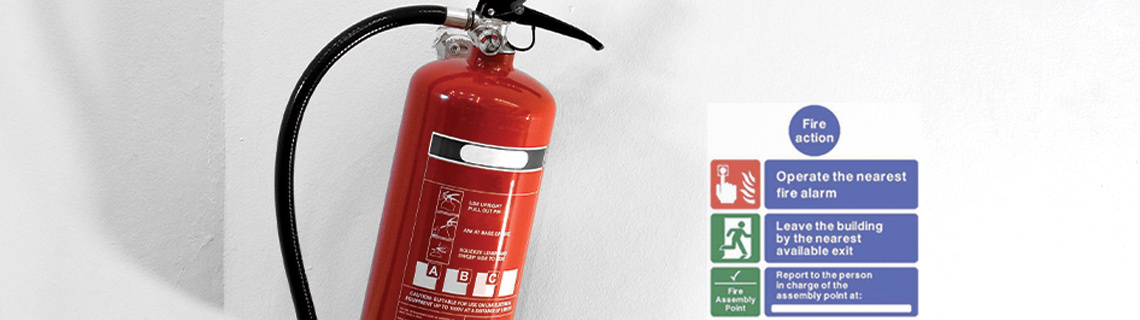
Fire action notices provide clear instructions on what to do if a fire occurs. They typically include how to raise the alarm, evacuation procedures and assembly point details. These notices are usually placed near fire alarm call points and in shared areas where they can be easily seen.
Mandatory Signs
Mandatory signs instruct people on actions they must take to maintain fire safety. Common examples include “Fire door keep shut” and “Fire exit keep clear.” These signs play an important role in preventing the spread of fire and ensuring escape routes remain accessible at all times.
Warning and Prohibition Signs
Warning and prohibition signs help reduce fire risks by controlling behaviour. These may include no smoking signs, warnings about flammable materials or restricted access notices. They are particularly important in higher-risk environments such as warehouses, industrial sites and construction areas.
Understanding Fire Safety Sign Colours
Fire safety signs use standard colour coding so they can be recognised instantly, even in high-pressure situations.
- Green indicates safe conditions, such as escape routes and emergency exits
- Red is used for fire equipment and emergency devices
- Blue represents mandatory actions that must be followed
- Yellow highlights warnings or potential hazards
Most fire safety signs should comply with BS EN ISO 7010, which ensures consistent symbols that are recognised across the UK and internationally.
How Do I Decide What Fire Signs My Business Needs?
Determining the correct signage for your workplace starts with a fire risk assessment. This should take into account the size and layout of the building, the number of occupants, the type of work being carried out, and the level of fire risk present.
Lighting conditions and visibility are also important factors. In environments where lighting may fail or visibility is reduced, additional measures such as photoluminescent signage may be necessary.For example, a small office may only require basic exit and equipment signage, whereas a warehouse or construction site may need more extensive signage to address higher risks and more complex layouts.
Whilst some signs are absolutely vital, for example, fire equipment signs, others, such as fire safety boards, are not necessarily essential but still very useful. The better your fire safety measures, the more secure everyone in the workplace will feel, and the higher the chance that you will be able to deal with a fire successfully.
Leading Fire Safety Sign Suppliers
Fire safety signage is not just about meeting legal requirements; it is a vital part of keeping people safe. Clear, well-placed signs reduce confusion, support faster evacuation, and help emergency services respond effectively. Taking the time to assess your workplace and install the correct signage ensures you are both compliant and properly prepared in the event of a fire.
Frequently Asked Questions
Are fire safety signs a legal requirement in the UK?
Yes, fire safety signs are required wherever risks cannot be completely eliminated and must comply with relevant UK regulations.
Who is responsible for fire safety signage?
The responsible person, such as an employer, landlord, or building manager, must ensure that appropriate signage is in place and maintained.
How many fire exit signs do I need?
You need enough signs to clearly guide someone unfamiliar with the building to safety without confusion.
Do fire signs need to meet a specific standard?
Yes, they should comply with BS EN ISO 7010 to ensure consistency and recognition.
Choose Glendining Signs
Glendining Signs supplies a wide range of compliant fire safety signs for workplaces across the UK, including offices, schools and construction sites. If you are unsure what signage you need, our team can provide expert advice and help you choose the right solution for your environment.